bbdbuy Hiking Boot Fit Guide
bbdbuy Hiking Boot Fit Guide
bbdbuy Hiking Boot Fit Guide
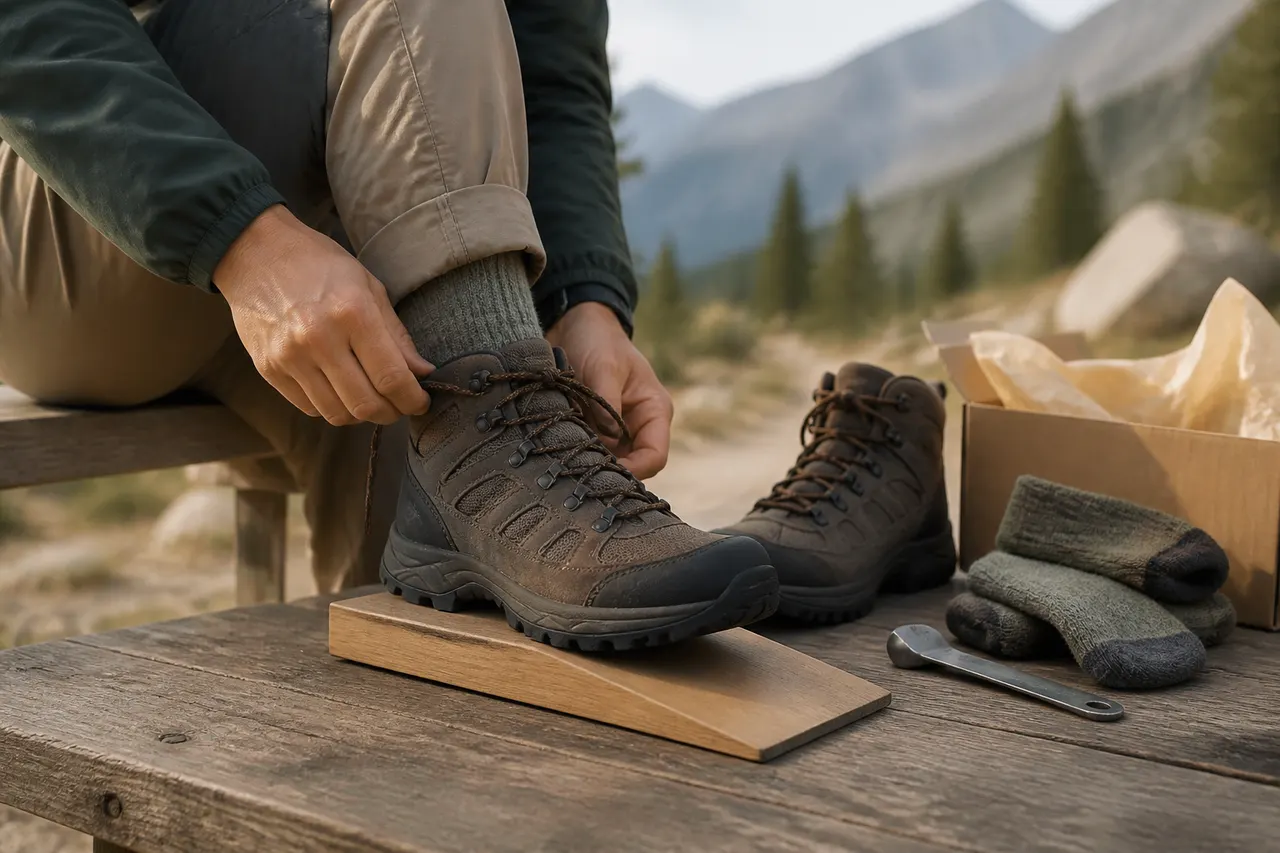
When choosing hiking boots, you can't simply transfer your everyday athletic shoe size directly to a bbdbuy product. The real question to solve is: when you can't try them on in advance, how can you use your foot measurements, instep height, heel stability, and downhill motion to decide whether to keep the current size, exchange for another, or give up on a style whose last doesn't suit you?
This guide is intended for buyers who are planning to look at hiking boot information on bbdbuysheet.net and are willing to record measurements before ordering and complete indoor checks after delivery. It is not suitable for those who need medical orthotic advice, have persistent foot pain, or when the product page lacks a size chart and the seller cannot provide additional data.
Information verified as of: August 30, 2026. Size charts, inventory, prices, materials, seller promises, shipping fees, and return/exchange conditions are all subject to change and should be based on the product information and actual order terms visible at the time you are ready to order. This article was generated by an automated content system based on clear measurement and verification methods and does not claim that any specific product was purchased, worn, or tested by a real person.
First, clarify mileage, load, and uphill/downhill usage scenarios
The same pair of boots may not cause noticeable problems during short urban walks, but on long descents, carrying a load, or walking continuously, they may cause toe impact, instep pressure, and heel friction. Before looking at sizes, write down your expected usage conditions:
Approximate walking time per session and whether it will be used on consecutive days
Mainly flat roads, gravel roads, continuous climbing, or long descents
Whether you will carry a heavy load
Whether you plan to wear thin socks, medium-thick hiking socks, or double-layer socks
Whether you will use arch supports, orthotic insoles, or replacement insoles
If you mainly face long descents, toe room and heel lock should take priority over a "just snug" fit when standing still. If you need to carry a load, the changes in your feet under pressure should also be considered. Don't assume a shoe's last, sole, or support method suits your route just because it is labeled "hiking." 🥾
Explain the boundaries between verifiable information and what cannot replace trying on
When viewing products on bbdbuysheet.net, you can record the sizing system, insole length, last description, material description, product images, and seller notes shown on the page, and then go to the actual product page to verify that the information is still valid. The size label itself can only serve as an index and cannot prove fit.
Online information usually cannot reliably answer the following questions:
Will the upper press on the instep or form wrinkles under actual stress?
Can the heel cup match the individual shape of the heel bone?
Can the lacing system secure the heel without compressing the instep?
Will the toes slide forward on downhill sections?
Will differences between left and right feet be amplified by the last?
Therefore, this guide provides methods to reduce the chance of choosing the wrong size, not a substitute for remote fitting. If the seller only provides a vague description like "standard size," it cannot be treated as measurable evidence.
Measure foot length, width, and instep height
Measurements should be taken while wearing the socks and insoles you plan to use with the hiking boots, preferably at a time when your feet have had normal activity but are not yet noticeably swollen. Secure the paper on a hard floor, with the heel naturally close to a vertical wall, standing normally with weight on the foot being measured. Mark the position of the longest toe and the widest point separately; do not assume the big toe is always the longest.
Instep height does not need to be converted into a universal size. You can use a soft tape measure to record the circumference at the highest point of the instep and take a photo of the tape placement, then ask the seller about the internal space of the upper or the structure of the lacing area for the corresponding size. High-instep buyers should also observe whether the tongue is thickly padded, whether the spacing of the eyelets allows adjustment, and whether the page images clearly show the opening of the upper.
It is recommended to keep the following records:
Record item | Left foot | Right foot | Decision use |
|---|---|---|---|
Foot length | Actual measurement | Actual measurement | Compare with size data using the same measurement standard |
Widest point of forefoot | Actual measurement | Actual measurement | Rule out lasts that are too narrow |
Instep circumference | Actual measurement | Actual measurement | Determine if the upper and lacing area may cause pressure |
Socks and insoles used | Name or thickness | Name or thickness | Ensure consistent conditions for re-measurement after delivery |
Use the larger foot as the lower limit that cannot be compressed, and also note that the smaller foot may need improved fixation through lacing or appropriate insoles. Do not sacrifice the big foot's toes or forefoot to accommodate the small foot.
Reserve toe room for hiking socks and downhill movement
Toe room is not simply "buying a size larger." The appropriate goal is: after wearing the planned socks and lacing up properly, the toes can spread naturally; when simulating downhill force, the foot does not slide forward as a whole to hit the toe box.
You can perform the following actions in a safe indoor area:
Stand normally and confirm that there is no direct contact between the front of the longest toe and the toe box.
Bend your knees and slowly shift your body weight forward to simulate the force on the foot during downhill.
Take several slow steps in succession, paying attention to whether the toes hit and whether the forefoot is squeezed on both sides.
Check whether increasing toe room also causes noticeable heel lift.
Different brands, lasts, and sizing systems may have different internal length standards, so you should not apply a fixed amount of room to all products. If the page only shows the outsole length, that cannot be used directly as the available internal space. 📏
Check last width, heel lock, and boot shaft position
Whether hiking boots fit well requires meeting the requirements of four areas simultaneously: forefoot, instep, heel, and boot shaft.
The forefoot should allow the toes to spread naturally, but lateral movement should not be so much that the foot slides when turning. The fixation force at the instep should come mainly from adjustable laces, not from continuous pressure from the upper. If you only feel no numbness or pain when the laces are loose, but obvious pressure marks appear immediately after tightening, that is usually not an ideal locking method.
Heel lock should be checked without squeezing the toes. First use the normal lacing method allowed by the product, then walk, go up stairs, and simulate downhill. Slight material movement does not necessarily mean a poor fit, but continuous heel lift, concentrated friction, or the need to overtighten the laces to control the heel should all be recorded as risks.
The boot shaft also needs to be checked at the ankle bone position. If the edge repeatedly presses exactly on the prominent point of the ankle bone, even if it is tolerable when stationary, it may worsen discomfort during long-distance activities. Do not keep them just because "they will soften with wear," unless the product's material description and return/exchange conditions allow you to accept that risk.
Record missing size evidence from product information and images
When browsing candidate products on bbdbuysheet.net, you should create a separate record for each one and not transfer size charts from another product or seller. At least check the following:
Is the label in Chinese, European, US, or another sizing system?
Does the size data refer to foot length, insole length, internal length, or outsole length?
Are men's/women's styles or different batches using the same chart?
Can product images clearly show the toe shape, lacing area, tongue, and heel structure?
Does the page clearly state the materials, rather than just guessing from images?
Can the actual product page be accessed, and does the name match the candidate product?
Does the seller state the return/exchange period, return conditions, and related fees?
When information is missing, write down the missing item instead of filling it in with experience. For example: "Missing internal length for size 43," "Last width not stated," "Cannot tell from images whether the insole is removable." These records can be directly converted into questions before ordering.
If key measurements are not answered, the safest conclusion may not be to guess between two sizes, but to switch to a product with more complete evidence. 🔍
After delivery, conduct indoor fit checks and confirm return/exchange conditions
Before opening the box, first check the current return/exchange requirements, confirm whether trying on is allowed, to what condition the packaging and labels must be kept, and the time window for raising questions. Do not wear them outdoors before deciding to keep them, and do not remove any labels that may affect returns/exchanges.
Indoor checks can be done in a fixed order:
Verify the received style, color, left/right feet, and size label.
Inspect the upper, sole, stitching, eyelets, and interior for visible abnormalities.
Insert the planned insoles and wear the socks used during measurement.
First stand, then walk, go up stairs, and simulate downhill movements.
Record the sensations in the toes, forefoot, instep, heel, and ankle separately.
After taking off the shoes, check for concentrated pressure marks, friction hotspots, numbness, or persistent pain.
Just "no pain" during a short indoor session is not enough to prove suitability for long-distance hiking, but obvious toe jamming, numbness, localized sharp pain, or uncontrollable heel slip is sufficient reason to stop trying and check the return/exchange conditions. If there is persistent pain, old injuries, or abnormal sensations, consult a qualified medical or foot professional.
Make a keep or exchange decision based on foot shape records
The final decision should not just say "runs large" or "runs small," but pinpoint the problem to a specific area.
Conditions for keeping include: no pressure on the big foot side, toes do not hit the toe box when simulating downhill, forefoot can spread naturally, no numbness or obvious pressure on the instep, heel locks stably, and the boot shaft does not repeatedly hit the ankle bone.
Situations that suggest exchanging for a larger size are when the toes or forefoot have insufficient space, and a larger size could still solve the problem with the same last. But if the current size already has significant heel lift, simply going larger usually increases the risk of slipping.
Situations that suggest exchanging for a smaller size are when the overall length is clearly excessive and the heel cannot be secured, while a smaller size can still retain necessary toe and forefoot space. If the problem is concentrated in a low instep, narrow forefoot, or mismatched heel cup shape, changing size may not be effective, and a more reasonable choice may be to change to a different last or style.
The potential savings from this recording method come from reducing return shipping, repeated orders, and losses from non-returnable items caused by guessing sizes; since this article does not have specific product prices, route shipping costs, and return/exchange fees, it cannot give a fabricated fixed savings amount. The added cost is the time required for measurement, inquiry, and indoor checks, while the remaining risk includes size chart errors, batch differences, and the inability of short-term try-ons to simulate long-distance activities.
It is most suitable for buyers with different left and right foot sizes, high insteps, wide forefeet, or those planning long downhill activities. It is not recommended to continue guessing sizes when key size data is missing, return/exchange conditions are unclear, the seller cannot confirm measurement standards, or there are foot issues requiring professional evaluation. Completing records before deciding to keep, exchange, or change styles is usually more reliable than repeatedly hesitating over a size label. ✅
agent platform shopping FAQ
1. What should I do if I am not satisfied with the product I received on bbdbuysheet.net?
Reach out to your agent platform's customer service team right away. Most non-specialty products from Chinese sellers include a 5-day unconditional return and exchange option. If you are unhappy, you may ask for a return. Should the order have already been shipped from the warehouse and reached your location, and you then find a defect, you must contact the agent platform's customer support so they can assist you in getting in touch with the merchant to work out a compensation arrangement.
Customer service email addresses for each platform are listed below:
kakobuy: [email protected]
oopbuy: [email protected]
usfans: [email protected]
hipobuy: [email protected]
superbuy: [email protected]
Browse our latest products and find your next favorite item.